Blood Money
How Traffickers Profited While Black Communities Burned
By Omari Bakari
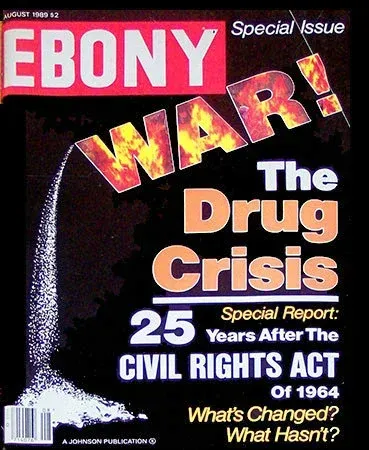
The crack cocaine epidemic generated enormous wealth, but none of it stayed in Black communities. While families were destroyed, neighborhoods collapsed, and hundreds of thousands went to prison, a network of profiteers extracted billions from Black suffering.
Drug traffickers, gun dealers, corrupt officials, and criminal organizations built empires on the backs of our devastation, and when the smoke cleared, they walked away rich while we buried our dead and counted our losses. This wasn’t just a public health crisis or a law enforcement failure—it was an economic extraction scheme that transferred massive wealth out of Black communities and into the hands of those who supplied the poison and the weapons that came with it.
The drug trafficking networks were sophisticated and international. Cocaine flowed from South American cartels through Mexico and Central America, with documented connections to Nicaraguan contra rebels who the U.S. government supported during the Cold War. These suppliers made fortunes manufacturing and transporting cocaine that would be converted to crack in American cities.
The markup was astronomical—cocaine purchased for thousands in Colombia sold for hundreds of thousands on American streets once converted to crack. But the real money wasn’t made by street-level dealers in Black neighborhoods who faced decades in prison for small amounts. The wealth accumulated at higher levels, with wholesalers and suppliers who rarely touched the product and almost never faced consequences. Many of these mid-level and upper-level traffickers were not Black, yet they profited enormously from sales in Black communities.
They provided product on credit to street dealers, creating debt relationships that trapped young Black men in the trade. When dealers were arrested, suppliers simply found new distributors. The prison pipeline was good for business—it created constant turnover and prevented anyone from accumulating enough knowledge or resources to move up the distribution chain.
Gun traffickers profited just as handsomely. The crack trade required weapons for protection and territorial control, creating unprecedented demand for firearms in urban Black communities. Guns flowed into these neighborhoods through illegal trafficking networks that purchased weapons legally in states with lax gun laws and transported them to cities with strict regulations.
Federal agencies tracked these trafficking patterns but rarely interdicted them effectively. Gun dealers and traffickers made millions supplying the weapons that turned crack disputes into bloodbaths. The homicide rate in Black communities exploded, with young Black men killing each other over corners and customers, using guns that enriched suppliers who never entered these neighborhoods.
Every shooting represented profit for gun traffickers who created artificial scarcity through illegal supply chains, driving up prices and maximizing returns. When bodies piled up in Black communities, gun traffickers counted their money in safe suburban locations far from the violence their products enabled.
The government itself profited disgracefully. Asset forfeiture laws allowed law enforcement agencies to seize cash, cars, homes, and property from anyone suspected of drug involvement, often without conviction or even charges. Police departments became dependent on this revenue stream, creating perverse incentives to focus on drug enforcement over other policing priorities.
Entire departments funded equipment purchases, salaries, and operations through seized assets taken from Black communities. The properties seized in Black neighborhoods during the epidemic represented generational wealth—homes purchased by grandparents, cars bought with hard-earned savings, cash kept at home by people who didn’t trust banks with good reason. Law enforcement took it all under the guise of fighting drugs, enriching their departments while impoverishing families.
Many seized assets were never returned even when charges were dropped or defendants were acquitted. The government essentially robbed Black communities legally, using drug laws as justification for wealth extraction on a massive scale. Meanwhile, private prisons became a booming industry. Corporations like Corrections Corporation of America built empires housing the Black men and women imprisoned by the War on Drugs, receiving per-prisoner payments from taxpayers while providing minimal services and lobbying for harsher sentencing to ensure steady customer flow.
Predatory businesses also cashed in on community destruction. As crack destabilized neighborhoods and mass incarceration removed breadwinners, Black families became increasingly desperate. Payday lenders, check-cashing businesses, rent-to-own stores, and subprime lenders flooded into these communities, charging usurious rates that extracted whatever wealth remained.
Bail bondsmen made fortunes off families trying to free arrested relatives. Commissary services charged imprisoned people and their families extreme markups for basic necessities. Phone companies contracted with prisons to charge unconscionable rates for calls, forcing families to pay dollars per minute to speak with incarcerated loved ones. Collection agencies pursued debts from people with no ability to pay, garnishing the meager wages of those who found work despite criminal records.
Every dimension of the crack epidemic and its aftermath became an opportunity for extraction. Black suffering was monetized at every stage—from the initial drug sale through arrest, incarceration, and the struggle to rebuild afterward.
Real estate investors and developers waited like vultures for the endgame. As the epidemic ravaged Black neighborhoods, property values plummeted, creating investment opportunities for those with capital and patience. Speculators purchased homes at distressed prices from families forced to sell due to job loss, incarceration, or inability to maintain properties.
They sat on these properties through the worst years, paying minimal taxes on devalued real estate. When the epidemic finally subsided and neighborhoods stabilized—often after decades of suffering—these investors sold for massive profits or developed properties for incoming gentrifiers. The people who survived the epidemic, who held communities together when everyone else fled, who endured the violence and loss and stayed because these neighborhoods were home—they were priced out and displaced. The wealth appreciation they waited decades to see benefited investors who contributed nothing to community survival but arrived with capital to extract the recovery value.
The final insult is that virtually none of the traffickers, corrupt officials, predatory lenders, or opportunistic investors ever faced accountability. Drug kingpins fled to countries without extradition treaties, living comfortably on their ill-gotten wealth. Gun traffickers operated with impunity, protected by laws that made tracing weapons difficult and prosecutions rare. Police departments kept their seized assets with minimal oversight. Private prison executives became millionaires and billionaires. Predatory lenders paid occasional fines that were tiny fractions of their profits. Real estate investors became respectable developers, their fortunes laundered through the passage of time.
Meanwhile, Black communities still count the cost—in lives lost, families destroyed, wealth stolen, and neighborhoods we can no longer afford to live in. The crack epidemic was never just about addiction or crime. It was about extraction. Who profited and who paid. And the answer is clear: traffickers, dealers, corrupt officials, predatory businesses, and investors profited enormously while Black communities paid with everything we had.
They got rich. We got destroyed. And nobody has been held accountable.
That’s why reparations aren’t charity—they’re the return of stolen wealth, the payment of debts owed, and the accountability that should have come decades ago but must come now before the last survivors are gone and this crime against Black America is forgotten like so many others before it.
Journal