Betrayed After Service: How America Denied Black Veterans the GI Bill—and the Trillions It Cost Them
A Measurable Case for Reparations Based on the Greatest Racialized Wealth Transfer in U.S. History
By: Omari Bakar
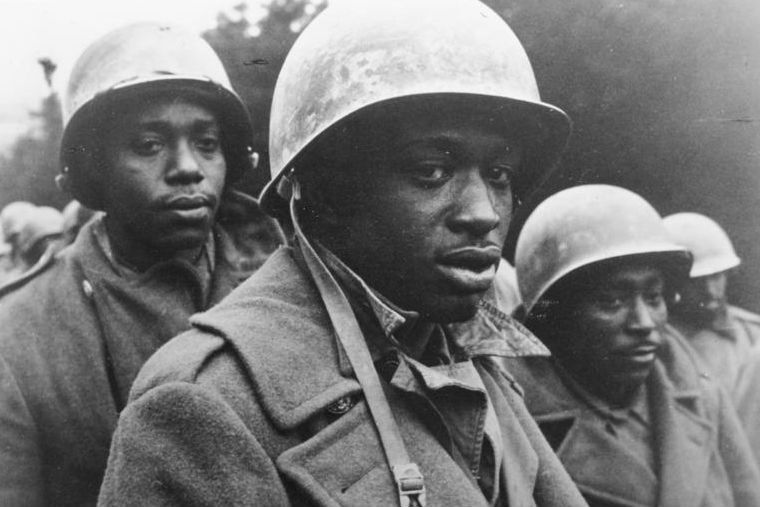
When African American soldiers returned home from World War II, they came back as veterans of democracy—but were forced to live as second-class citizens. They had worn the uniform, fought fascism abroad, and helped secure victory for the United States. Yet when it came time to receive the benefits promised under the Servicemen’s Readjustment Act of 1944—the GI Bill—they were systematically denied access. What is often celebrated as the single greatest wealth-building program in American history became, in practice, a “whites-only” pathway to the middle class. The atrocity committed against Black veterans was not neglect; it was design.
The GI Bill offered three transformative benefits: low-interest home loans, tuition and living support for higher education, and capital for businesses and farms. While the law was federal, its implementation was deliberately left to states, local banks, universities, and housing authorities—institutions deeply entrenched in segregation. Southern lawmakers ensured this structure precisely so Jim Crow could survive. As historian Ira Katznelson has documented, the bill was written to accommodate racism, not dismantle it. Banks refused to issue federally backed mortgages to Black veterans. Universities denied admission or funneled Black students into underfunded programs. HBCUs were overwhelmed and unable to absorb the demand. In effect, Black veterans were told they were eligible on paper—but excluded in reality.
The damage from this exclusion is measurable. Approximately 1.2 million African Americans served in World War II. The vast majority were denied meaningful access to GI Bill benefits. The most significant loss was homeownership. Between 1945 and 1960, the GI Bill backed nearly 8 million home loans, fewer than 2 percent of which went to Black veterans. Homeownership became the engine of white middle-class wealth, generating equity passed down across generations. Using conservative metrics, the average GI Bill-enabled home today is worth roughly $350,000, with total intergenerational equity gains of $400,000 to $500,000. If 800,000 Black veterans were denied this opportunity, the resulting loss in housing wealth alone totals approximately $320 billion.
Education was the second major harm. The GI Bill paid full tuition and living expenses, allowing millions of white veterans to attend college and dramatically increase lifetime earnings. A college degree carries an average lifetime earnings premium of about $1 million. Even assuming only 25 percent of Black veterans would have completed degrees if given equal access, the denial of education benefits represents another $300 billion in lost earnings.
The third metric is denied business and farm loans. GI Bill capital seeded countless white-owned enterprises that became multigenerational assets. Conservative estimates place the lost business wealth for Black veterans at $60 billion. Crucially, these losses were not one-time; they compounded. Homes were inherited, degrees produced higher incomes, and businesses were passed down. Applying a modest 2x intergenerational multiplier to these losses yields an additional $680 billion. Finally, the systemic exclusion fostered long-term distrust of financial and government institutions, suppressing Black wealth accumulation for decades—an impact conservatively valued at $200 to $300 billion.
Taken together, the reparations owed for the GI Bill’s discriminatory denial total approximately $1.6 trillion. This figure is not speculative. It is based on clear metrics: denied assets, denied income, and denied compounding over generations. The atrocity against Black veterans was that they served a country that refused to serve them back. Reparations are not about revisiting the past for its own sake; they are about correcting a measurable injustice that still shapes the racial wealth gap today. The GI Bill built America’s middle class. It did so by excluding Black veterans. That debt remains unpaid—and it is long overdue.
Journal