What a Win for Black America Really Means
When Justice Is Enforced, Reparations Become Real—and Healing Becomes Possible

By: Omari Bakari
For generations, the word reparations has been treated as abstract, controversial, or unrealistic—something symbolic rather than tangible, something debated rather than delivered. But a true legal and constitutional win for Black America would change that forever. It would transform reparations from a moral argument into a meaningful, lived reality for millions of people whose lives were shaped, shortened, or shattered by government policy. A win means the nation finally accepts that harm was not incidental—it was unlawful—and that remedy is not optional.
A win for Black America means that justice is no longer confined to history books or speeches, but felt in homes, bank accounts, schools, and communities. It means the men and women who lost decades of their lives to unconstitutional sentencing regimes are no longer invisible casualties of “policy mistakes,” but recognized victims of state wrongdoing. It means that time stolen is acknowledged as harm, not dismissed as collateral damage. Reparations become meaningful when the law names the injury and calculates the cost—not emotionally, but constitutionally.
For families, a win means restoration. It means children raised without parents because of mass incarceration finally see accountability for the years of absence, trauma, and economic loss. It means grandparents who lost homes to civil forfeiture or one-strike housing policies see that dispossession recognized as a violation of rights, not a personal failure. It means voting rights stripped through racially skewed felony convictions are restored not as favors, but as corrections of injustice. Reparations matter most when they repair what was broken: family stability, property ownership, political voice, and economic opportunity.
For communities, a win means reinvestment with purpose. It means neighborhoods hollowed out by incarceration and disinvestment receive resources proportional to the harm they endured—schools rebuilt, health centers funded, mental health services expanded, and Black-owned institutions strengthened. Reparations are not simply checks; they are infrastructure for dignity. They are about rebuilding what mass punishment destroyed and ensuring the next generation inherits possibility rather than policy-induced trauma.
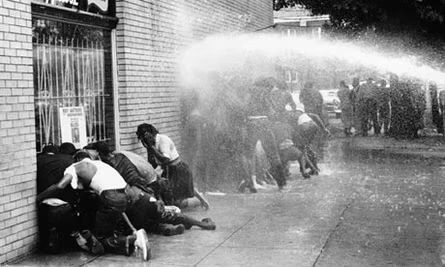
For the Black church and civil rights movement, a win means alignment between faith, law, and action. It means sermons about justice are matched by outcomes that reflect it. It means organizers can point not only to struggle, but to results. Reparations become meaningful when they validate decades of advocacy, prayer, protest, and persistence—when the sacrifice of elders is honored not just with praise, but with progress.
Most importantly, a win for Black America means the Constitution finally works the way it was promised to work. It means equal protection is not selective. It means the same government that punished Black communities under the law is held to account by that same law. Reparations, in this context, are not charity. They are enforcement. They are the Constitution doing its job—correcting injustice, restoring balance, and affirming that Black citizenship is full, equal, and protected.
When Black America wins, the nation does not lose. Democracy strengthens. The rule of law gains credibility. And justice—long delayed—finally becomes real for the people who paid its price.
Hashtags:
#ReparationsNow #JusticeForBlackAmerica #EqualProtection #ConstitutionalJustice #BlackCommunities #HealingAndRepair #CivilRights
Key Words:
reparations, Black America, constitutional justice, equal protection, mass incarceration impact, community restoration, racial justice, civil rights enforcement
Journal